
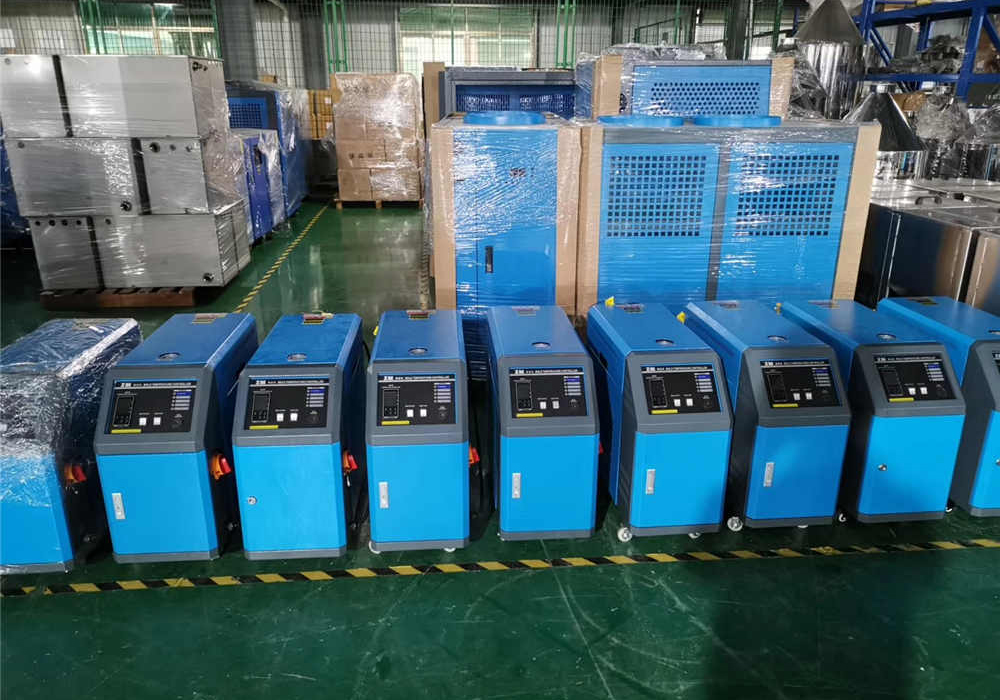
Dongguan ZAOGE Intelligent Technology Co., Ltd. has long been a leader in the field of plastic and rubber environmental protection automation equipment. With its core focus on research, development, production, and sales of high-quality machinery such as plastic shredders, granulators, dryers, and vacuum feeders, the company consistently delivers advanced technologies that drive industry innovation and efficiency. A critical aspect often overlooked in these processing systems is the role of temperature controls, a vital component ensuring optimal performance and safety throughout plastic manufacturing workflows.
### What Are Temperature Controls?
Temperature controls are devices or systems designed to regulate temperature within certain parameters to maintain a desired thermal environment. In the context of plastic processing, temperature controls manage the heating or cooling phases necessary for melting, drying, or shaping plastic materials. Proper temperature regulation ensures product quality, enhances energy efficiency, and prevents equipment damage or operational hazards.
Typically, temperature control systems involve sensors (such as thermocouples or resistance temperature detectors), controllers, and heating or cooling elements. Sensors continuously monitor the material or environment temperature, sending real-time data to controllers that adjust heating/cooling inputs to sustain the target temperature. These systems can operate on simple on/off mechanisms or sophisticated proportional-integral-derivative (PID) algorithms to maintain precision.
### Importance of Temperature Controls in Plastic Processing
In plastic production and recycling, maintaining precise temperature profiles is essential. For example, during extrusion or injection molding, plastics must be melted within specific temperature ranges to preserve material properties and achieve dimensional accuracy. Overheating can degrade polymers, causing color change or brittleness, while underheating results in incomplete melting and defects.
Moreover, drying plastic pellets before processing eliminates moisture that can lead to voids, splay marks, or surface blemishes in finished products. Temperature controls in drying equipment ensure consistent heat application, optimizing drying time and energy consumption.
During plastic shredding and granulation, temperature monitoring prevents motor overheating, reducing downtime and maintenance costs. Vacuum feeders also benefit from temperature regulation to avoid material clumping caused by humidity or temperature fluctuations.
### Dongguan ZAOGE Intelligent Technology Co., Ltd.’s Commitment to Quality and Innovation
Dongguan ZAOGE Intelligent Technology Co., Ltd. specializes in machinery that embodies the latest advancements in automation and environmental protection in plastic and rubber processing. The company’s product portfolio includes:
- **Plastic Shredders**: Efficient machines that break down plastic waste into smaller pieces, facilitating recycling or further processing.
- **Plastic Granulators**: High-performance units that convert shredded plastics into uniform granules ready for reuse.
- **Plastic Dryers**: Advanced drying systems that remove moisture from plastic materials, enhancing downstream processing quality.
- **Vacuum Feeders**: Automated feeding devices that transfer granulated or pelletized plastic materials seamlessly into processing machines.
By integrating precision temperature controls into these products, the company maximizes operational efficiency and product quality while promoting sustainable production practices.
### Enhancing Environmental Protection Through Temperature Controls
Plastic processing inevitably involves significant energy consumption and presents environmental challenges. By implementing precise temperature controls, manufacturers can reduce wasted energy caused by overheating or overcooling. This optimization not only lowers operational costs but also contributes to environmental conservation by minimizing emissions associated with power usage.
Additionally, maintaining ideal processing temperatures reduces material waste caused by defects or degradation, supporting the circular economy goals fueling innovations in plastic recycling. Dongguan ZAOGE Intelligent Technology Co., Ltd.’s dedication to environmental protection is evident in its focus on creating equipment that balances high performance with eco-friendly operation.
### Future Trends in Temperature Control Technology
The plastic processing industry is evolving with growing demands for automation, energy efficiency, and sustainability. Future developments in temperature controls are expected to incorporate:
- **Smart Sensors and IoT Integration**: Enabling real-time remote monitoring and predictive maintenance to prevent machine failure and optimize energy use.
- **Advanced Algorithms**: Utilizing machine learning to fine-tune temperature profiles dynamically based on material behavior and processing conditions.
- **Energy Recovery Systems**: Capturing waste heat to be reused within the process, further reducing carbon footprint.
- **User-Friendly Interfaces**: Making temperature management accessible and intuitive for operators, minimizing errors and training requirements.
As a key player in this field, Dongguan ZAOGE Intelligent Technology Co., Ltd. continues investing in research and development to incorporate such innovations into its automated machinery, reinforcing its commitment to driving industrial advancement responsibly.
### Conclusion
Temperature controls are indispensable components in plastic and rubber environmental protection automation equipment. They ensure optimal material properties, improve process efficiency, reduce energy consumption, and support sustainable manufacturing practices. Dongguan ZAOGE Intelligent Technology Co., Ltd. exemplifies excellence in this arena by developing and producing sophisticated plastic shredders, granulators, dryers, and vacuum feeders equipped with precise temperature management systems. As industries worldwide strive for greener and smarter production, intelligent temperature control remains a cornerstone technology enabling these advancements.